Basketball Club Teams San Diego Creating Opportunities Beyond the Game
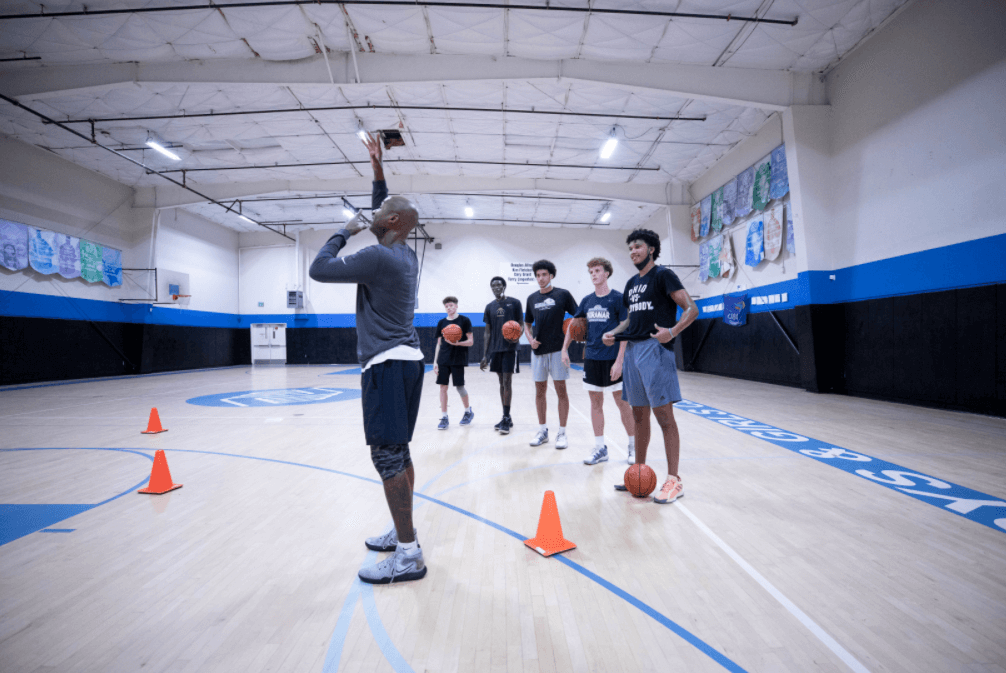
San Diego has never been short on basketball talent. Walk into a school gym on a weeknight in Mission Valley, Chula Vista, Carlsbad, or La Jolla, and you will see it right away. One court has a middle school guard learning how to handle pressure without picking up the dribble. Another has a high school wing getting shots up after practice because his release still slows down under fatigue. In the corner, parents are talking about travel schedules, academics, and whether their child needs another season with a club program or a different environment entirely.
That is where the conversation around Basketball Club Teams San Diego gets more interesting. For families new to the youth basketball scene, club basketball can look like a simple equation: join a team, play more games, get better. Anyone who has spent time around serious player development knows it is more complicated than that. A strong club team can absolutely sharpen skills and create exposure, but the best programs do something larger. They help young athletes build habits, relationships, confidence, and perspective that carry beyond the scoreboard.
The phrase "beyond the game" gets used loosely, sometimes to the point that it loses meaning. In practice, it comes down to whether a program treats basketball as a vehicle for growth or just a string of tournaments. There is a big difference between those two models, and families feel that difference over time.
Why club basketball matters in San Diego
San Diego offers a unique athletic environment. The region has a deep pool of multisport athletes, strong high school programs, year-round training options, and enough geographic spread that a player's experience can vary widely depending on where they live and which gym they call home. A player in North County may have a different club path than a player in the South Bay, even if both are equally motivated and talented.
Club basketball fills an important gap between casual recreation and varsity competition. For some athletes, it provides the first setting where they face structured practices, role competition, and opponents who punish mistakes quickly. That matters. A player can dominate in a local rec league with raw speed or height, then hit a wall in club ball when everyone is bigger, more skilled, and coached to exploit weaknesses.
That challenge is healthy when the environment is right. Good club teams push players to adjust. They teach young athletes that effort alone is not always enough, and that improvement usually comes from doing ordinary things with discipline, day after day. Footwork. Defensive stance. Timing on cuts. Shot selection. Communication. Recovery. Those are not glamorous topics, but they are the foundation of lasting development.
San Diego also sits in a region where competition extends beyond county lines. Club teams often play around Southern California, which exposes athletes to different styles and a higher level of play. One weekend a team might face a disciplined half-court group that never beats itself. The next, it sees relentless athleticism in transition. Players who learn to adapt in those moments gain more than game experience. They learn composure.
The real value is not just games played
Families often start by comparing schedules. How many tournaments? How many practices? How far is the travel? Those are fair questions, but they are not the most important ones. Volume without purpose can waste a season.
A player does not improve simply because he or she played five games in a weekend. In fact, too many games with too little teaching can reinforce bad habits. I have seen young guards spend entire tournament circuits dribbling into traps because nobody stopped to teach pace, spacing, or when to give the ball up early. I have seen bigs run rim to rim all day without once learning how to seal, screen at the right angle, or defend ball screens without fouling. Busy is not the same as productive.
The stronger Basketball Club Teams San Diego families tend to respect share a few traits. They train with intention. They define roles clearly. They care about player growth even when it does not produce instant wins. They also communicate honestly. If a player is not ready for more minutes, the coach says why. If the athlete needs strength work, better conditioning, or more confidence handling contact, the feedback is specific.
That honesty can be uncomfortable, especially in a culture where every family wants progress to be visible and immediate. But young athletes benefit from direct standards. Vague praise feels good for a day. Precise coaching changes a season.
Development looks different at different ages
One of the biggest mistakes in youth basketball is treating ten-year-olds, fourteen-year-olds, and seventeen-year-olds as if they need the same club experience. They do not.
For younger players, the best club settings emphasize fundamentals, joy, and learning how to compete without fear. They need repetition more than hype. A fourth or fifth grader does not need a brand-heavy atmosphere that imitates elite high school recruiting culture. That child needs patient teaching, smart correction, and enough touches to make mistakes without being benched every possession.
Middle school is often where things become more serious. Players start separating by physical maturity, confidence, and skill foundation. This is the age when weak mechanics become harder to hide. A shot that survived elementary school because the defender closed late gets exposed fast. A ball handler who never learned to use the off hand starts turning the ball over against real pressure. Club basketball, when coached well, can turn these flaws into teachable moments instead of sources of frustration.
By high school, the picture changes again. The focus often shifts toward role definition, exposure, and performance under pressure. Some players are legitimate college prospects. Many are not, and that is perfectly fine. They still need a meaningful basketball experience. A smart club program helps both groups. It can prepare one athlete for recruiting conversations while helping another become a reliable varsity contributor, leader, or student-athlete with strong habits.
That matters because not every opportunity tied to club basketball is about scholarships. Sometimes the real win is learning how to be coached hard without shutting down. Sometimes it is discovering that a player thrives as a defender and connector rather than a primary scorer. Sometimes it is simply realizing that discipline built through sport carries straight into school and work.
Beyond the scoreboard, what players actually gain
The most valuable outcomes of club basketball are often the least visible from the bleachers. A parent sees points, rebounds, and minutes. A coach sees body language after mistakes, willingness to accept a role, and whether the athlete is becoming dependable.
There are a few areas where strong club teams consistently create growth:
- accountability under pressure
- time management around school, training, and travel
- social confidence with teammates, coaches, and unfamiliar competition
- resilience after poor performances or limited roles
- comfort with structured feedback
Those traits sound broad, but they show up in very practical ways. A player who used to spiral after one turnover learns to move on to the next possession. A shy athlete starts speaking in huddles. A teenager who once resisted criticism begins asking better questions after practice. Those shifts can change much more than basketball.
I remember a player who was physically gifted but emotionally fragile. If a coach raised his voice, his energy dropped for the rest of practice. He was not lazy. He just had not learned how to separate correction from rejection. Over the course of a season, his club coach handled that challenge well. The coach stayed demanding but became consistent in how feedback was delivered. By late spring, the player still got corrected often, but he no longer unraveled. That adjustment helped him on the court, and his parents later said it helped him in the classroom too. He stopped taking every hard comment from a teacher as a personal attack.
That is the kind of growth people mean when they say a sport builds character. It is not automatic. It happens when adults in the program know what they are doing.
What families should look for in a club program
The glossy version of club basketball can be persuasive. Sharp uniforms, social media posts, packed tournament calendars, polished slogans. None of that tells you much about the actual experience a player will have.
The better evaluation happens in the gym. Watch how the coaches teach. Do they spend practice time correcting footwork, spacing, and reads, or do they just run athletes through lines and scrimmage? Notice the temperature of the environment. Is it demanding in a healthy way, or chaotic and performative? Pay attention to players at the end of the bench. Good programs coach everyone, not just the leading scorer.
Parents should also ask practical questions that reveal priorities. How are teams formed? How often do rosters change? What is the balance between practice and tournaments? How does the staff handle playing time conversations? Is there a development plan for athletes who are not yet top contributors? Those details matter far more than a flashy banner from a past event.
There is also the question of fit. Not every strong club is right for every player. Some athletes need a highly competitive environment where they are challenged to fight for every minute. Others need a steadier setting with more teaching and confidence-building before they are ready for that level. Families sometimes make the mistake of joining the biggest brand available, only to discover the athlete gets lost in the shuffle.
A good fit balances challenge and opportunity. Too easy, and the player stagnates. Too advanced, and the player spends a season surviving rather than learning.
The pressure points families rarely talk about enough
Club basketball can open doors, but it also creates real strain. Time, money, travel, missed weekends, and emotional fatigue all become part of the picture. It is important to say that plainly.
In Southern California, commute time alone can change the experience. A ninety-minute drive to practice each way may be manageable for a few weeks, but over a full season it can wear down the entire family. Add tournament fees, uniforms, training costs, and meals on the road, and the investment grows quickly. Not every family can or should stretch itself to chase the most visible program.
There is also the matter of burnout. Young athletes who play year-round without meaningful rest often hit a point where basketball starts to feel like an obligation instead of a pursuit. Their body is present, but their curiosity disappears. When that happens, performance usually follows. Rest is not a sign of weak commitment. It is often the reason long-term development remains possible.
Parents carry pressure too. They want to make the right choices, support their child, and not miss opportunities. That mix can lead to overcorrection. Some families change teams too quickly after a difficult month. Others stay in poor situations too long because they fear starting over. The right answer depends on whether the athlete is still learning, still engaged, and still treated with honesty.
One of the healthiest questions a family can ask is simple: Is this experience making the player better, steadier, and more mature? If the answer is consistently no, the uniform should not matter.
Exposure is real, but it is often misunderstood
Recruiting conversations influence many decisions in club basketball, especially once players enter high school. Exposure matters, but it is not magic. Being present at an event does not guarantee meaningful evaluation, and not every athlete needs the same recruiting path.
College coaches and evaluators look for more than highlight moments. They notice how players defend, move without the ball, respond to coaching, and compete on possessions that will never appear in a social media clip. A flashy scoring outburst can draw attention, but consistency keeps it.
For most players, especially those outside the national spotlight, the path is steadier than families expect. It often involves strong academics, honest self-assessment, film, communication, and finding a level of college basketball that genuinely fits the athlete. Club teams can support that process, but they cannot manufacture it.
This is where good guidance is worth a lot. Ethical coaches do not promise scholarships to every family. They explain the landscape, tell players where they stand, and help them improve the pieces they can control. That may include helping an athlete become more versatile, tougher defensively, or more efficient offensively rather than chasing a scoring average that looks good online but means little to serious evaluators.
San Diego has produced many players who took different routes. Some developed early and played on nationally visible teams. Others emerged later, after physical growth or a stronger high school role. Club basketball can support either path, but only if the focus stays on substance.
Coaching quality is the hinge point
If there is one factor that shapes the club experience more than any other, it is coaching. Not charisma. Not volume. Not social media presence. Actual coaching.
Strong youth and high school coaches teach details relentlessly. They know when to stop a drill and fix something small because small things become big things under pressure. They understand age-appropriate expectations. They also know that each player needs a slightly different approach. One athlete needs calming down. Another needs a push. A third needs clarity more than motivation.
Great club coaches also respect the long game. They know that a seventh grader's future is not defined by one tournament in April. They are willing to sacrifice a few short-term possessions so a player can learn https://johnathancckz449.theglensecret.com/a-closer-look-at-basketball-club-teams-in-san-diego a read properly. They can pursue wins without letting winning distort development.
That balance is hard. Many coaches talk about development, then tighten the rotation the moment a bracket game gets close. There is some fairness in that. Competition matters. Still, if a program always defaults to survival mode, younger players rarely grow into bigger roles. Over time, the team becomes dependent on a few early bloomers while others plateau.
Parents do not need perfection from a coach, but they should expect consistency, teaching, and integrity. When a coach has those qualities, trust tends to build even during rough stretches.
What a healthy season can look like
The most productive club seasons are not necessarily the ones with the most trophies. They are the ones where progress is visible in meaningful ways. A team learns to defend with better discipline by May than it did in March. A player becomes more reliable against pressure. Another develops a jump stop, a left-hand finish, or a willingness to box out every trip instead of every third trip.
That kind of progress often comes from a season structure that makes sense. Practices should teach concepts that appear in games. Film, even in small doses, can help players connect mistakes to decisions. Tournament schedules should challenge the roster without overwhelming it. Recovery should be respected. Communication with families should be clear enough that expectations do not become rumor.
When those parts line up, the season starts to serve the athlete rather than consume the athlete.
Questions worth asking before you commit
Choosing among Basketball Club Teams San Diego families consider can feel overwhelming, especially if a player is moving up an age level or searching for a stronger competitive fit. Before committing, it helps to sit with a few hard questions.
- Will this coach teach my child, or mainly manage the team?
- Is the roster size realistic for actual development and playing opportunity?
- Does the schedule support growth, or is it built to look impressive?
- How does this program define success for players who are not stars?
- Can our family sustain the time and cost without resentment?
Those questions cut through most of the noise. They bring the conversation back to what matters: the athlete's development, the family's stability, and the integrity of the environment.
When club basketball works the way it should
At its best, club basketball gives young people a setting where standards are real and support is real too. Players learn to show up on time, compete when tired, accept coaching, recover from failure, and contribute to something larger than themselves. Those lessons are not exclusive to basketball, but basketball teaches them in a direct and memorable way.
San Diego is full of athletes who have benefited from that kind of environment. Some went on to college basketball. Some became strong high school leaders and stopped there. Some simply carried the discipline of club sports into college, work, and adult life. All of those outcomes count.
That is why the best Basketball Club Teams San Diego offers should be measured by more than tournament records or online buzz. The deeper question is what kind of people and players leave the gym after a season in the program. Are they more skilled? More accountable? More resilient? More honest about their strengths and weaknesses? More prepared for what comes next, whether that is varsity tryouts, college recruiting, or life outside sports?
When the answer is yes, the opportunity created goes well beyond the game.
Lamont Smith Basketball Academy
888 Clairemont Mesa Blvd Suite T-2, San Diego, CA 92123
(619) 639-8778
FAQ About Basketball Club Teams San Diego
How can a player join an LSBA club team?
Players are evaluated during practices so the coaching staff can recommend an appropriate team and development level. Families should contact the academy to confirm current openings and evaluation details.
Are club teams available for newer basketball players?
Yes. LSBA describes multiple levels, including a developmental option for newer players as well as more competitive teams for athletes with prior club experience.
What do LSBA club team practices emphasize?
Practices emphasize basketball fundamentals, team defense, structure, communication, and player development. The specific focus may vary according to the team and experience level.
Do all LSBA teams travel?
Travel expectations vary by level. Some teams focus on local competition, while advanced teams may participate in tournaments elsewhere in Southern California or beyond. Families should confirm the current schedule before enrolling.