Basketball Club Teams San Diego That Focus on Holistic Athlete Development
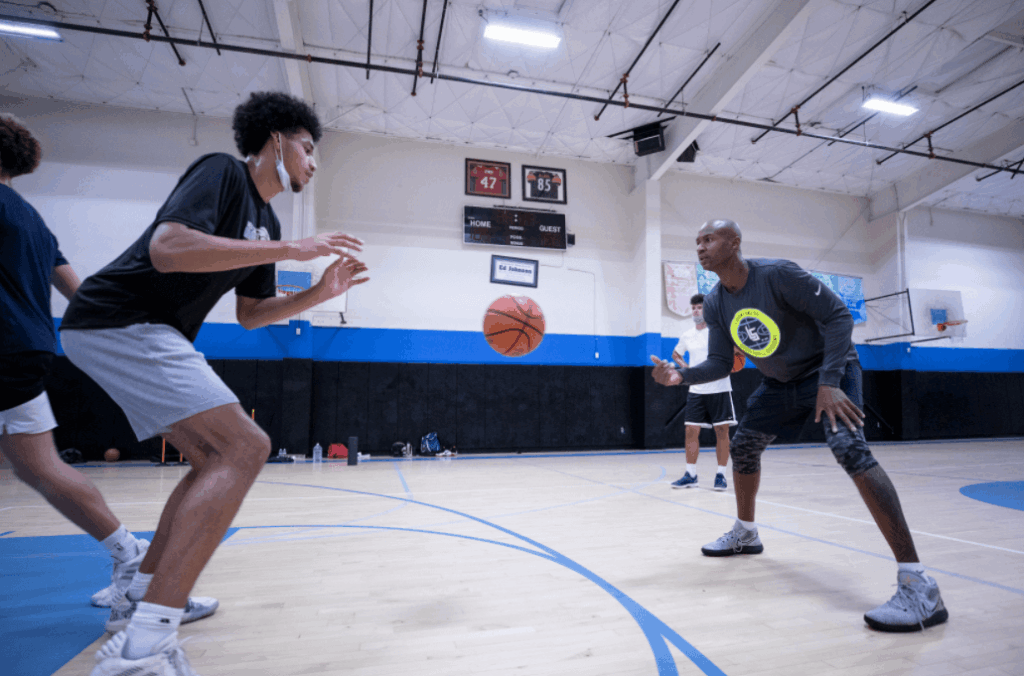
Families looking at Basketball Club Teams San Diego often start with the obvious questions. Is the team competitive? Who is the coach? How many tournaments are on the schedule? What level of exposure can a player get?
Those questions matter, but they are not the whole picture. The better question is whether a club helps a young athlete grow in ways that last beyond one season and far beyond one highlight reel. In basketball, development is rarely linear. A middle school player who dominates because she matures early may plateau if her game never expands. A freshman who barely cracks the rotation might become a high-level varsity contributor by junior year because he learns footwork, confidence, and how to process the game. Club basketball can accelerate either path, for better or worse.
San Diego is a strong basketball market for this conversation. The area has deep youth participation, year-round training options, access to quality leagues, and enough talent density that families can find programs across a wide range of philosophies. That is a strength, but it also creates noise. Some teams are built around weekend wins and social media clips. Others put far more thought into the complete athlete, meaning skill growth, physical preparation, emotional maturity, communication habits, academic accountability, and long-term love of the sport.
The clubs that truly stand out are usually not the loudest. They are the ones where players improve over time in visible, measurable ways. Their athletes move better, make smarter decisions, handle pressure with more poise, and leave the program with tools that serve them in high school basketball and beyond.
What holistic athlete development actually means in club basketball
The phrase gets used often, sometimes so often that it loses shape. In a meaningful basketball setting, holistic development means the program does not treat a player as only a scorer, defender, or tournament asset. It sees the athlete as a complete person whose performance is tied to several connected areas.
Skill development is the starting point, but not the finish line. A good club team works on ball handling, finishing, shooting mechanics, defensive positioning, passing reads, and footwork. A holistic one goes further. It teaches when to use each skill, how to adjust under fatigue, and how to stay effective when the primary strength is taken away. It also understands that confidence is trainable. Players who know why a drill matters and how it translates to a game carry themselves differently.
Physical development matters just as much. Young players need strength, mobility, balance, and body control. They need to learn how to decelerate, land, absorb contact, and protect their joints. In Southern California, where many athletes play multiple sports or train year-round, overuse becomes a real issue. The strongest clubs recognize that performance gains and injury prevention are tied together. They do not run every session at maximum volume simply to create the appearance of toughness.
Mental development is another dividing line. Youth basketball can become emotional quickly. Playing time concerns, travel stress, social comparison, and recruiting talk all hit players at younger ages than many parents expect. Clubs with a broader developmental approach help athletes handle mistakes, accept coaching, regulate frustration, and compete without melting down when a game turns. That piece often shows up late in close contests, not on a practice flyer.
Then there is the human side. Respect, punctuality, communication, academic habits, and responsibility still matter. College coaches and high school coaches notice the player who responds well to correction, supports teammates from the bench, and shows up prepared. Those traits are not separate from basketball. They shape a player’s opportunities.
Why San Diego is uniquely positioned for this model
San Diego offers advantages that make holistic club development more realistic than in some markets. The weather allows for year-round work. There are enough gyms, trainers, leagues, and tournament opportunities to give clubs flexibility. Players can often find access to strength coaches, shooting trainers, and sports performance specialists without traveling far.
At the same time, the geography creates trade-offs. A family in North County may look at a team based farther south and discover that three weeknight practices turn into major commute burdens. A player in East County may be on a roster with teammates from all over the county, which can complicate school balance and recovery. That matters more than people admit. A strong developmental environment can be undermined if the athlete is spending two hours in the car after school, eating dinner late, and trying to finish homework exhausted.
That is why local fit matters as much as reputation. The best Basketball Club Teams San Diego families choose are not always the ones with the flashiest brand. Often, they are the ones whose structure aligns with the player’s age, goals, school demands, and readiness for competition.
The coaching question that matters more than wins
Parents understandably like winning. Players do too. But in club basketball, wins can be misleading.
A 12U team might rack up victories simply because it has two early-maturing players who overpower everyone near the basket. That says little about how well the team develops guards, teaches spacing, or prepares athletes for the speed of later levels. By high school, the clubs that consistently produce adaptable players usually have coaches who teach in layers.
The first layer is technical. Can the coach identify the real reason a player struggles? For example, a player who keeps missing short floaters may not have a “touch problem.” She may be taking off too early, drifting sideways, or picking up the ball without balance. A coach with trained eyes can separate symptom from cause. That shortens the learning curve.
The second layer is tactical. Club coaches should teach decision-making, not just patterns. A player needs to know how to read a hedge, reject a screen, tag the roller, and recognize when transition spacing is poor. This is where many supposedly elite programs fall short. They run plenty of sets but do not create many thinkers.
The third layer is relational. Young athletes respond best when the standards are clear and the feedback is specific. Constant yelling may produce compliance in the short term, but it rarely builds confident, self-correcting players. The coaches who create durable growth are usually demanding, calm, and consistent. They do not spare players from accountability, but they also do not confuse humiliation with hard coaching.
One of the clearest signs of a strong club is how the coach handles the ninth or tenth player on the roster. Stars usually get attention everywhere. The deeper question is whether the program still teaches the developing player with patience and detail.
Skill work should look different from team practice
A common problem in youth club basketball is calling everything “development” when it is really just team prep. There is a difference.
Team practice organizes lineups, installs offensive actions, sharpens defensive rules, and prepares for opponents or tournament play. It has value, especially for game IQ and role clarity. But it often does not provide enough high-repetition, individualized skill work. A player can attend three team practices a week and still not get enough focused touches to change shooting consistency, weak-hand confidence, or finishing craft.
Holistic clubs usually address this in one of two ways. Either the team practice itself carves out meaningful development blocks, or the program offers integrated skills sessions that are coordinated with the coaching staff. The important detail is integration. If the skills trainer is teaching one footwork pattern and the team coach wants another, the athlete gets mixed messages.
The most effective environments make the pieces speak to each other. If a player is working on a quicker release, the team coach knows to create repetitions where that matters. If an athlete is building lower-body strength after recurring knee soreness, the practice plan may limit needless jump volume while still keeping intensity high.
This is where parents should listen closely to the language a club uses. “We practice hard” is not the same as “we teach well.”
Strength, recovery, and injury prevention are not extras
For years, many youth basketball families treated physical preparation as something serious players could address later. That approach no longer makes sense. The game is faster, tournament calendars can be heavy, and many athletes start specializing earlier than is ideal. A club that ignores physical development leaves improvement on the table.
That does not mean every 13-year-old needs a complex training plan or a full private performance team. It means clubs should understand age-appropriate movement quality. Younger athletes need to learn posture, landing mechanics, hip control, coordination, and simple strength patterns. Older athletes can progress toward more structured strength work, acceleration training, and conditioning aligned with basketball https://beckettgsvn314.readspirex.com/posts/basketball-club-teams-in-san-diego-and-the-search-for-the-right-fit-2 demands.
Recovery belongs in this conversation too. A player who trains six days a week without enough sleep and hydration does not become tougher. More often, performance drops, irritability rises, and nagging pain starts to accumulate. Good programs educate athletes on the basics. Eat enough. Sleep enough. Warm up with intent. Report pain early. Understand the difference between fatigue and injury.
I have seen talented players lose critical seasons because nobody slowed things down soon enough. Shin pain gets brushed off until it becomes a stress reaction. Patellar tendon soreness becomes a chronic issue because the athlete keeps jumping through it. Wrist and finger injuries linger because the player fears losing minutes. Clubs that care about the whole athlete create a culture where speaking up is seen as responsible, not weak.
The emotional side of player development
Not every growth problem is technical or physical. Some are emotional.
Club basketball places young athletes in situations that expose identity quickly. A player who was the best on a rec team may suddenly become one of several strong guards. Another may get less playing time than expected. A confident shooter may go cold over a full tournament weekend and start passing up open looks. These moments are developmental opportunities if the coach handles them well.
The healthier club environments teach athletes how to respond to discomfort. That might mean learning to sit with reduced minutes without spiraling. It might mean giving a player a role that does not flatter the ego right away but strengthens the complete game. It might mean helping a team navigate conflict after a rough loss rather than pretending everything is fine.
This matters in San Diego’s club scene because players often cross paths repeatedly, in school ball, travel tournaments, and training circuits. Reputations travel fast. Athletes who learn composure, respect, and self-awareness tend to earn trust in every setting.
Parents have a role here too. The strongest developmental arcs usually happen when the adults around the athlete are aligned. If the club is asking a player to defend harder, rebound outside her area, or embrace a temporary bench role while expanding her game, that plan gets undermined when the car ride home turns into a grievance session.
How to tell whether a club is serious about long-term growth
Families do not need insider access to evaluate a program. A lot becomes clear by watching one practice, one game, and one coach-parent interaction.
Here are a few markers worth looking for:
- Coaches teach details during live action, not just effort.
- Players off the ball stay engaged, which usually reflects practice standards.
- The bench behavior is constructive rather than performative.
- Corrections are specific, short, and tied to improvement.
- The style of play gives multiple athletes chances to develop decision-making.
If all you see is isolation basketball, frantic pressing with no teaching, or constant yelling after mistakes, that is useful information. So is the opposite. If the athletes communicate, sprint into spacing, help each other up, and respond to coaching without fear, the foundation is probably stronger than the team’s record alone might suggest.
Exposure is important, but timing is everything
The pressure to chase exposure has changed club basketball. For some families, especially in the high school years, showcase events and college visibility are legitimate priorities. But exposure without readiness can backfire. College coaches are not just looking for raw production. They notice foot speed, feel, decision-making, body language, and whether the athlete understands role basketball.
A holistic program manages this timing better. It does not sell every player on the same pathway. The late-blooming wing may need another year of strength and confidence before major live periods. The undersized guard may need to become an elite shooter and decision-maker first. The versatile forward may benefit from playing up at times, even if it means fewer points, because the speed forces adaptation.
San Diego families sometimes get caught between local convenience and national ambition. There is no single correct answer. Some athletes absolutely benefit from higher-level regional or national competition. Others would gain more from staying in a strong local club where they play meaningful minutes, receive better coaching attention, and can build their game with less noise.
The question is not whether exposure matters. It does. The question is whether the player is in a setting that turns exposure into opportunity rather than stress.
The parent experience says a lot about the program
No club can eliminate every difficult conversation. Playing time, roster balance, tournament costs, and travel expectations are part of the territory. But mature programs communicate clearly and early.
Families should know the broad philosophy before the season gets rolling. Is the team development-heavy? Is it highly competitive? How are minutes generally handled? What is the expectation around outside training, missed practices, and school sports overlap? Ambiguity creates most of the drama people later describe as “club politics.”
The better Basketball Club Teams San Diego parents tend to recommend years later have a few common traits. Communication is direct. Fees and travel expectations are transparent. Coaches are accessible but not chaotic. There is a process for concerns. Most importantly, the messaging stays consistent. A program that says development matters but then shortens the bench drastically every weekend is telling you what it values.
Parents should also pay attention to how the club talks about athletes. Programs that reduce players to rankings, offers, and social posts often create a transactional culture. Programs that talk about work habits, improvement, role acceptance, and school fit tend to produce steadier outcomes.
What players actually carry forward
A strong club season does more than add points per game or tournament medals. It leaves players with habits they can use anywhere.
A high school coach can tell quickly whether a new player comes from a teaching environment. The athlete usually knows how to listen, ask clarifying questions, warm up properly, and compete within structure. She may already understand timing on help defense, how to relocate after a pass, or how to communicate a switch. He may know how to absorb a poor shooting night without taking himself out of the game mentally.
Those details matter because basketball gets less forgiving at each level. The gap between players narrows. Athleticism increases. Coaches trust the athletes who can process, adapt, and stay composed. Holistic development gives a player a wider margin to survive those jumps.
It also protects the joy of the game. That point is underrated. Athletes who spend years in win-at-all-costs environments often burn out earlier than expected, even if they are talented. The players who stay connected to basketball longest usually had adults around them who pushed them hard while still keeping perspective.
Questions worth asking before committing
A family does not need to interrogate a coach like a recruiter, but a few thoughtful questions can reveal a lot very quickly.
- How does your program balance team success and individual development?
- What does a typical practice week look like?
- How do you support athletes physically, especially around workload and injury prevention?
- How do you handle communication with parents and players?
- What kinds of players tend to thrive in your environment?
The answers should sound concrete, not polished. If a coach can explain how practice time is used, how roles are taught, and how development is tracked over months rather than weekends, that is a good sign. If every answer circles back to tournament prestige, rankings, or who the team beat last spring, the philosophy may be narrower than advertised.
The best fit is not always the most obvious one
There is no universal best club for every athlete in San Diego. Age, maturity, position, family schedule, school demands, financial realities, and long-term goals all matter. A highly driven sophomore trying to play in college may need a different environment than a seventh grader still learning how to love hard coaching and steady repetition. Both deserve thoughtful development. The route just may not look the same.
The healthiest choice is often the one that combines challenge with stability. The athlete is pushed, but not buried. Coached, but not demeaned. Exposed to strong competition, but not rushed past her developmental stage. Held accountable, but still seen as a person.
When families search for Basketball Club Teams San Diego, those are the standards worth keeping in view. Talent matters. Results matter. But the clubs that leave the deepest mark are the ones that build capable players and grounded young adults at the same time. That kind of development takes more patience than a tournament weekend and more substance than a social media highlight. It also tends to hold up much longer.
Lamont Smith Basketball Academy
888 Clairemont Mesa Blvd Suite T-2, San Diego, CA 92123
(619) 639-8778
FAQ About Basketball Club Teams San Diego
How can a player join an LSBA club team?
Players are evaluated during practices so the coaching staff can recommend an appropriate team and development level. Families should contact the academy to confirm current openings and evaluation details.
Are club teams available for newer basketball players?
Yes. LSBA describes multiple levels, including a developmental option for newer players as well as more competitive teams for athletes with prior club experience.
What do LSBA club team practices emphasize?
Practices emphasize basketball fundamentals, team defense, structure, communication, and player development. The specific focus may vary according to the team and experience level.
Do all LSBA teams travel?
Travel expectations vary by level. Some teams focus on local competition, while advanced teams may participate in tournaments elsewhere in Southern California or beyond. Families should confirm the current schedule before enrolling.